Finding the right words after someone passes away can be difficult. Other Ways to Say Rest in Peace can help when you want beautiful ways to say rest in peace, a rest in peace other terms, or want to understand the rest easy meaning and rest of the easy death. You may also wonder how to say rest in peace in other words with warmth and respect.
Other Ways to Say Rest in Peace are shared in simple and thoughtful ways. You will find gentle phrases for messages, tributes, and condolences. These words can help you express sympathy, love, and respect when it matters most.
What Does “Rest in Peace” Mean?
“Rest in Peace” is a phrase used to express the hope that a person who has died is now free from suffering and at peace. It comes from the Latin requiescat in pace, a line long used in Christian funeral prayers and later inscribed on gravestones. Over time, the phrase , and its abbreviation “RIP” , became a general, non-denominational way to acknowledge someone’s death and honor their memory, regardless of the speaker’s specific religious beliefs.
At its core, the phrase carries two ideas: that the deceased’s struggles are over, and that they deserve calm, dignity, and remembrance.
When to Use “Rest in Peace”
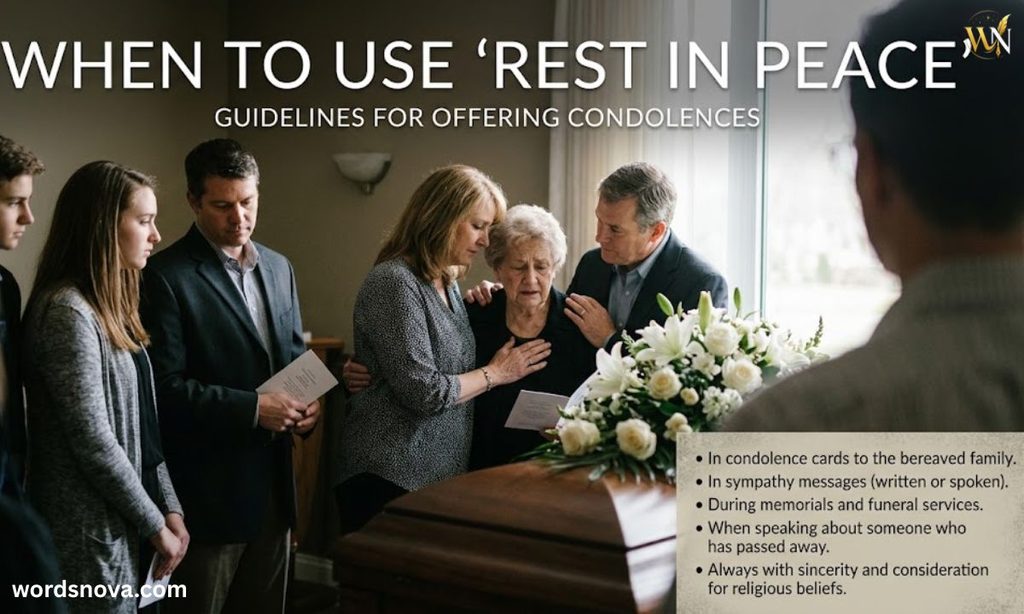
“Rest in Peace” fits almost any situation involving a death, but it tends to work best in these contexts:
- Condolence messages:cards, texts, or emails sent to grieving family or friends
- Social media tributes:posts marking the passing of a public figure, colleague, or loved one
- Obituaries and memorial programs:formal written tributes
- Gravestones and memorial plaques:traditional, lasting inscriptions
- In conversation , when someone shares sad news about a death
It’s less appropriate as a stand-alone message with no other context, since it can come across as impersonal if it’s the only thing you say. Pairing it with a specific memory, a compliment about the person, or an offer of support makes it feel warmer and more genuine.
Is It Professional or Polite to Say “Rest in Peace”?
Yes, “Rest in Peace” is generally considered polite and appropriate in professional settings, such as when a colleague or client passes away. It’s brief, respectful, and widely understood across cultures and religions, which makes it a safe default.
That said, in formal or workplace communication, it’s often better paired with a more complete sentence rather than used alone. For example, instead of just texting “RIP,” a professional message might read: “I was so sorry to hear about your father’s passing. Rest in peace, and please let me know if there’s anything I can do.” This shows sincerity without seeming abrupt.
Synonyms For “Rest in Peace”
| Phrase | Best Used For |
| May You Rest in Eternal Peace | Formal tributes, obituaries |
| Gone but Never Forgotten | Social media, memorial cards |
| Forever in Our Hearts | Personal messages, family tributes |
| May Your Soul Find Peace | Religious or spiritual contexts |
| Rest Easy | Casual, close relationships |
| Sleeping in Heavenly Peace | Religious tributes, hymns |
| In Loving Memory | Gravestones, memorial programs |
| At Peace Now | Comforting messages after long illness |
| Until We Meet Again | Hopeful, faith-based farewells |
| Forever Remembered | General tributes |
| May You Find Eternal Rest | Formal condolences |
| Peace Be Upon You | Multi-faith or Islamic contexts |
| Rest in God’s Care | Christian condolences |
| Your Memory Lives On | Legacy-focused tributes |
| A Life Well Lived | Celebrating a long, full life |
| With Love and Remembrance | Cards and floral tributes |
| In Peaceful Slumber | Poetic, gentle tributes |
| Forever Loved and Missed | Personal, emotional messages |
| Safe in Heaven | Comforting religious tributes |
| Rest in Everlasting Light | Formal, spiritual tributes |
| Your Spirit Lives On | Inspirational tributes |
| May Angels Watch Over You | Comforting, especially for children |
| At Rest Forever | Gravestones, formal tributes |
| Gone from Sight, Never from Heart | Poetic tributes |
| With Deepest Love and Peace | Sympathy cards |
| In Gentle Rest | Soft, comforting tributes |
| Honored and Remembered Always | Tributes for public figures |
| Peaceful Beyond This World | Reflective, philosophical tributes |
| May Your Journey Be Peaceful | Farewell-focused messages |
| Resting in Eternal Love | Romantic partners, close family |
1. May You Rest in Eternal Peace
Meaning: This phrase extends the traditional wish for peace by adding the word “eternal,” emphasizing that the peace being wished for has no end.
Best Use: Formal obituaries, memorial services, and written tributes where a more solemn tone is appropriate.
Tone: Reverent and formal.
Explanation: Adding “eternal” makes the sentiment feel timeless, which suits occasions where you want to convey lasting respect rather than a quick condolence.
Scenario: You’re writing the closing line of a printed memorial program for a grandparent’s funeral.
Examples:
- “May you rest in eternal peace, Grandpa. Your wisdom guided all of us.”
- The obituary closed with, “May you rest in eternal peace, beloved husband and father.”
- “To our founder, who built this company from nothing , may you rest in eternal peace.”
- The priest ended the service by saying, “May you rest in eternal peace, dear friend.”
- “Ten years later, we still say it: may you rest in eternal peace, Mom.”
2. Gone but Never Forgotten
Meaning: This phrase acknowledges that the person has physically left, while affirming that their memory remains alive in the hearts of those who knew them.
Best Use: Social media tributes, memorial cards, and casual condolence messages.
Tone: Warm and heartfelt, slightly informal.
Explanation: It shifts the focus from loss to legacy, which can feel comforting for people who want to emphasize how much someone mattered rather than dwelling on the sadness of their passing.
Scenario: You’re posting a tribute on social media after a close friend passes away.
Examples:
- “Gone but never forgotten , you made every room brighter.”
- The memorial card read, “Gone but never forgotten, our beloved coach.”
- “It’s been a year since we lost him, but he’s gone but never forgotten.”
- “Rest easy, Uncle Tom. Gone but never forgotten.”
- The plaque at the park entrance reads, “In honor of a man gone but never forgotten.”
3. Forever in Our Hearts
Meaning: This expression communicates that someone’s presence and influence will remain a permanent part of the speaker’s emotional life.
Best Use: Family tributes, sympathy cards, and personal messages to close friends or relatives.
Tone: Tender and intimate.
Explanation: Unlike more formal phrases, this one centers the relationship rather than the afterlife, making it especially fitting for messages to people who were emotionally close to the deceased.
Scenario: You’re signing a sympathy card for a coworker whose mother recently died.
Examples:
- “You’ll be forever in our hearts, sweet Nana.”
- The card simply said, “Forever in our hearts. Thinking of your family.”
- “Our dog was more than a pet , she’s forever in our hearts.”
- “Forever in our hearts, forever missed, forever loved.”
- “Even though you’re gone, you’re forever in our hearts, dear friend.”
4. May Your Soul Find Peace

Meaning: This is a spiritually oriented wish that the deceased’s soul, following death, reaches a state of calm and rest.
Best Use: Religious or spiritual condolence messages, particularly in Christian, Islamic, or interfaith contexts.
Tone: Gentle and spiritual.
Explanation: Because it directly references the soul, this phrase suits audiences who hold beliefs about an afterlife and want language that reflects that worldview.
Scenario: You’re messaging a friend whose grandmother, a devout churchgoer, has passed away.
Examples:
- “May your soul find peace, and may your family find comfort.”
- The eulogy ended with, “May your soul find peace in the arms of the Lord.”
- “After such a long illness, may your soul find peace at last.”
- “We light this candle so that may your soul find peace tonight.”
- “May your soul find peace, dear teacher , you shaped so many lives.”
5. Rest Easy
Meaning: A short, comforting phrase suggesting that the person’s struggles or burdens are now over.
Best Use: Casual messages to close friends or family, especially after someone endured a long illness or hardship.
Tone: Casual and comforting.
Explanation: Its brevity makes it feel personal and sincere rather than scripted, which is why it’s common among close friends and on social media.
Scenario: A close friend of yours passes away after a long battle with cancer.
Examples:
- “Rest easy, buddy. You fought so hard.”
- The text simply read, “Rest easy. We love you.”
- “No more pain, no more hospitals. Rest easy, Dad.”
- “Rest easy, old friend , the band won’t be the same without you.”
- “Rest easy tonight, knowing how many lives you touched.”
6. Sleeping in Heavenly Peace
Meaning: Borrowed from the well-known carol lyric, this phrase describes death as a peaceful sleep watched over by heaven.
Best Use: Religious tributes, hymn-inspired messages, and holiday-season memorials.
Tone: Poetic and reverent.
Explanation: The imagery of “sleep” softens the finality of death, which many people find comforting, especially in a religious framework.
Scenario: You’re writing a tribute for a relative who passed away around the holidays.
Examples:
- “She is sleeping in heavenly peace this Christmas.”
- The memorial banner read, “Sleeping in heavenly peace, beloved father.”
- “We imagine him sleeping in heavenly peace, free from pain.”
- “Sleeping in heavenly peace , that’s how we like to picture her now.”
- “Tonight, and every night, sleeping in heavenly peace.”
7. In Loving Memory
Meaning: This phrase introduces a tribute by signaling that what follows is dedicated to someone who has died and is remembered fondly.
Best Use: Gravestones, memorial programs, plaques, and formal written tributes.
Tone: Formal and dignified.
Explanation: It’s one of the most widely recognized memorial phrases, often used as a header rather than a full sentence, which makes it versatile for engravings and printed materials.
Scenario: You’re designing a headstone inscription for a family member.
Examples:
- “In loving memory of a devoted husband and father.”
- The bench plaque read, “In loving memory of Sarah, who loved this garden.”
- “In loving memory , gone too soon, missed every day.”
- “This scholarship is given in loving memory of our son.”
- “In loving memory of a teacher who changed hundreds of lives.”
8. At Peace Now
Meaning: This phrase reassures that the person’s suffering has ended and they’ve reached a calm, restful state.
Best Use: Messages following a long illness or difficult final days.
Tone: Comforting and reassuring.
Explanation: It’s often used to bring relief to grieving families by emphasizing that the pain is over, rather than dwelling on the loss itself.
Scenario: A friend’s father passes away after months in hospice care.
Examples:
- “He’s at peace now, after everything he went through.”
- “It’s hard to say goodbye, but she’s at peace now.”
- “At peace now, no more pain, no more fear.”
- “Try to find comfort knowing he’s at peace now.”
- “We take comfort knowing Grandma is at peace now.”
9. Until We Meet Again
Meaning: This is a hopeful farewell suggesting that separation from the deceased is temporary rather than permanent.
Best Use: Faith-based farewells, especially when the speaker believes in an afterlife reunion.
Tone: Hopeful and warm.
Explanation: Rather than framing death as a final goodbye, this phrase frames it as a pause before a future reunion, which can be especially comforting for religious audiences.
Scenario: You’re closing a eulogy for a parent with a message of hope rather than finality.
Examples:
- “Until we meet again, Dad. I love you.”
- The card read, “Not goodbye, just until we meet again.”
- “Until we meet again, old friend , save me a seat.”
- “She always said, ‘It’s not goodbye, just until we meet again.'”
- “Until we meet again, my love. Thank you for everything.”
10. Forever Remembered
Meaning: A simple statement affirming that the person’s memory will endure indefinitely among those who knew them.
Best Use: General tributes, plaques, and memorial posts that don’t require a religious tone.
Tone: Neutral and respectful.
Explanation: Its non-religious phrasing makes it a safe, versatile choice for mixed audiences or workplace tributes.
Scenario: Your company is honoring a longtime employee who recently passed away.
Examples:
- “Forever remembered for his kindness and dedication.”
- The company newsletter read, “Forever remembered, our colleague and friend.”
- “Forever remembered by everyone whose life she touched.”
- “A leader, a mentor, forever remembered.”
- “Forever remembered on this wall of honor.”
11. May You Find Eternal Rest
Meaning: A formal wish that the deceased achieves a permanent, peaceful state free from earthly troubles.
Best Use: Formal condolence letters and religious ceremonies.
Tone: Solemn and formal.
Explanation: This phrasing works well in written condolences where a more traditional, respectful register is expected, such as in letters to a grieving family.
Scenario: You’re writing a condolence letter to a business associate whose parent has died.
Examples:
- “May you find eternal rest, and may your family find strength.”
- The letter closed, “May you find eternal rest, beloved colleague.”
- “After decades of service, may you find eternal rest.”
- “May you find eternal rest, free from all worry.”
- “We pray that you find eternal rest and lasting peace.”
12. Peace Be Upon You
Meaning: A blessing wishing peace for the deceased, rooted in interfaith and especially Islamic tradition (similar to “As-salamu alaykum”).
Best Use: Multi-faith gatherings, Islamic condolences, or interfaith memorial services.
Tone: Respectful and spiritual.
Explanation: Because this phrase has specific religious roots, it’s best used when you know it aligns with the beliefs of the deceased or their family.
Scenario: You’re attending the funeral of a Muslim colleague and want to offer a respectful blessing.
Examples:
- “Peace be upon you, and may your family find comfort.”
- “Peace be upon you, dear friend, until we meet again.”
- The card read, “Peace be upon you and your loved ones.”
- “Peace be upon you , you lived a life of generosity.”
- “We say peace be upon you as we remember his kindness.”
13. Rest in God’s Care
Meaning: This phrase expresses trust that the deceased is now being looked after by a higher power.
Best Use: Christian condolences and religious funeral programs.
Tone: Faithful and reassuring.
Explanation: It reframes death as a transition into divine protection, which can bring comfort to religious families seeking language rooted in their faith.
Scenario: You’re comforting a grieving relative who finds strength in their faith.
Examples:
- “Rest in God’s care, knowing you are safe now.”
- The pastor said, “She now rests in God’s care.”
- “Rest in God’s care, Grandpa , we’ll see you again.”
- “Rest in God’s care, free from all pain and worry.”
- “We take comfort knowing he rests in God’s care.”
14. Your Memory Lives On
Meaning: This phrase focuses on legacy, affirming that the impact and memory of the person continues after death.
Best Use: Tributes for teachers, mentors, community leaders, or anyone with a wide influence.
Tone: Inspirational and warm.
Explanation: It’s less about the afterlife and more about the lasting effect someone had, making it ideal for tributes centered on achievements or influence.
Scenario: You’re writing a tribute for a beloved teacher who recently passed.
Examples:
- “Your memory lives on in every student you taught.”
- “Your memory lives on through the foundation you built.”
- “She’s gone, but your memory lives on in this town forever.”
- “Your memory lives on in the laughter you left behind.”
- “Your memory lives on, Coach, every time we step on this field.”
15. A Life Well Lived
Meaning: This phrase celebrates a person’s life as full, meaningful, and complete rather than focusing on the loss itself.
Best Use: Tributes for someone who lived a long, fulfilling life.
Tone: Celebratory and reflective.
Explanation: It shifts the emotional focus from grief to gratitude, which fits well for funerals that are framed as a “celebration of life.”
Scenario: You’re speaking at the funeral of a grandparent who lived into their nineties.
Examples:
- “Ninety-four years , truly, a life well lived.”
- “We celebrate today a life well lived, full of love and laughter.”
- “A life well lived deserves to be remembered with joy.”
- “She traveled the world, raised a family, and lived a life well lived.”
- “Here’s to a life well lived and a legacy that continues.”
16. With Love and Remembrance
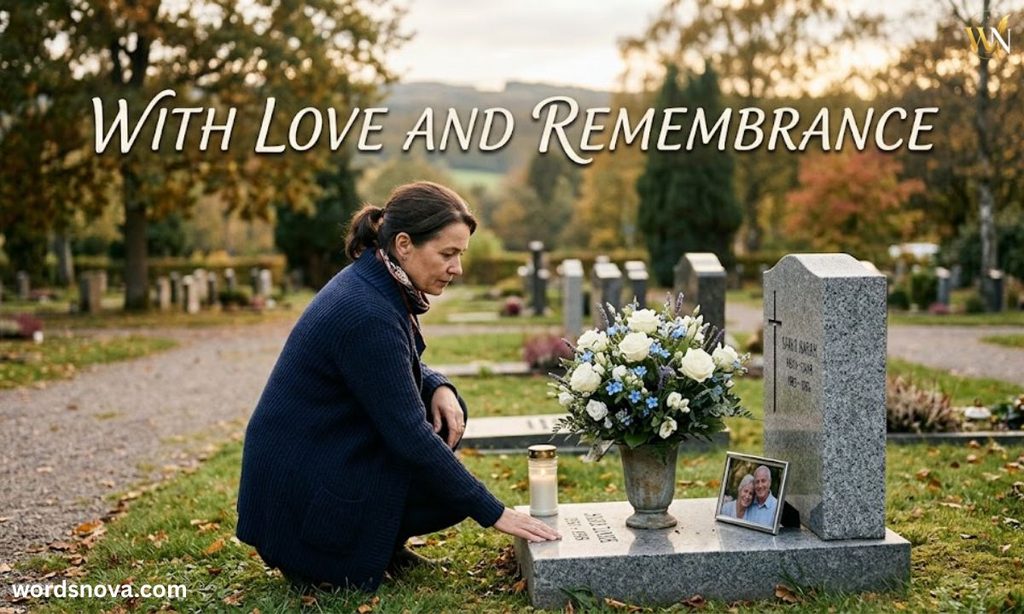
Meaning: A gentle closing phrase combining affection with a promise to keep the person’s memory alive.
Best Use: Sympathy cards, floral tribute notes, and closing lines of condolence messages.
Tone: Affectionate and sincere.
Explanation: It works well as a sign-off, similar to how “Sincerely” closes a letter, making it a natural choice for the end of a card or message.
Scenario: You’re attaching a note to flowers sent to a grieving family.
Examples:
- “With love and remembrance, from all of us at the office.”
- The card closed, “With love and remembrance, always.”
- “With love and remembrance, we send our deepest condolences.”
- “With love and remembrance for a truly wonderful woman.”
- “With love and remembrance, your neighbors and friends.”
17. In Peaceful Slumber
Meaning: A poetic way of describing death as a restful, undisturbed sleep.
Best Use: Poetic tributes, memorial poems, and gentle, reflective messages.
Tone: Soft and lyrical.
Explanation: The word “slumber” evokes a gentle image rather than a clinical one, which suits creative or poetic tributes such as memorial poems or engravings.
Scenario: You’re writing a short poem for a memorial service program.
Examples:
- “Now she lies in peaceful slumber, free from pain.”
- The poem read, “In peaceful slumber, under starlit skies.”
- “In peaceful slumber, dear friend, until dawn.”
- “He rests now in peaceful slumber, his work complete.”
- “In peaceful slumber, may you find the calm you deserved.”
18. Forever Loved and Missed
Meaning: This phrase openly acknowledges both continued love and the pain of absence.
Best Use: Personal, emotional messages to close family members or partners.
Tone: Heartfelt and honest.
Explanation: Unlike some phrases that focus only on peace or legacy, this one validates grief directly, which can feel more authentic to people who don’t want to mask their sadness.
Scenario: You’re writing an anniversary post marking one year since a loved one’s passing.
Examples:
- “One year later, and you’re still forever loved and missed.”
- “Forever loved and missed, our beautiful daughter.”
- “Forever loved and missed by everyone who knew her.”
- “You are forever loved and missed, more than words can say.”
- “Forever loved and missed, Dad. Happy birthday in heaven.”
19. Safe in Heaven
Meaning: This phrase offers reassurance that the deceased is now protected and free from harm in the afterlife.
Best Use: Religious condolences, particularly comforting for messages about children or young people.
Tone: Comforting and protective.
Explanation: The word “safe” adds an emotional layer beyond peace, which can be especially soothing when the death was sudden or involved suffering.
Scenario: You’re comforting a friend after the loss of a young family member.
Examples:
- “She’s safe in heaven now, watching over all of us.”
- “Safe in heaven, free from every fear.”
- “We find comfort knowing he’s safe in heaven.”
- “Safe in heaven, little one, forever in our hearts.”
- “Safe in heaven, surrounded by love and light.”
20. Rest in Everlasting Light
Meaning: This phrase pairs the idea of rest with the image of eternal, radiant light, often symbolizing hope or divine presence.
Best Use: Formal, spiritual tributes and memorial programs.
Tone: Elevated and hopeful.
Explanation: The imagery of “light” gives the phrase an uplifting quality, making it a good fit for services meant to feel hopeful rather than purely mournful.
Scenario: You’re closing a memorial service with a hopeful, uplifting statement.
Examples:
- “Rest in everlasting light, dear friend.”
- The program closed with, “Rest in everlasting light and love.”
- “May you rest in everlasting light, free from darkness.”
- “Rest in everlasting light, knowing you are deeply missed.”
- “We commend her to rest in everlasting light.”
21. Your Spirit Lives On
Meaning: This phrase suggests that a person’s essence, energy, or influence continues to exist beyond physical death.
Best Use: Inspirational tributes, especially for artists, activists, or community figures.
Tone: Uplifting and empowering.
Explanation: It works particularly well when honoring someone known for a strong personality or cause, since it emphasizes ongoing influence rather than absence.
Scenario: You’re honoring a community activist at a public memorial.
Examples:
- “Your spirit lives on in this community you built.”
- “Your spirit lives on in every cause you championed.”
- “Though you’re gone, your spirit lives on in us.”
- “Your spirit lives on through the art you left behind.”
- “Your spirit lives on, inspiring us to keep fighting.”
22. May Angels Watch Over You
Meaning: A comforting blessing suggesting that the deceased is being protected and cared for in the afterlife.
Best Use: Religious condolences, particularly gentle and comforting for messages about children.
Tone: Tender and protective.
Explanation: This phrase adds a nurturing, almost parental image, which makes it especially fitting for messages meant to soothe deep grief.
Scenario: You’re writing a condolence card after the loss of a young child.
Examples:
- “May angels watch over you, sweet child.”
- “May angels watch over you tonight and always.”
- “Sleep well, little one , may angels watch over you.”
- “May angels watch over you as you rest.”
- “We pray that angels watch over you now.”
23. At Rest Forever
Meaning: A straightforward phrase indicating that the person’s rest, once achieved through death, will be permanent.
Best Use: Gravestones and formal memorial inscriptions.
Tone: Simple and dignified.
Explanation: Its brevity and formality make it a common choice for engravings, where space is limited but the sentiment needs to feel timeless.
Scenario: You’re choosing a short inscription for a headstone.
Examples:
- “At rest forever, beloved father and grandfather.”
- The headstone simply reads, “At rest forever.”
- “At rest forever, free from pain and struggle.”
- “Here she lies, at rest forever, deeply loved.”
- “At rest forever in the garden he built.”
24. Gone from Sight, Never from Heart
Meaning: This phrase contrasts physical absence with lasting emotional presence, acknowledging loss while affirming continued love.
Best Use: Poetic tributes, memorial cards, and anniversary messages.
Tone: Poignant and tender.
Explanation: The contrast between “sight” and “heart” gives it a memorable, almost proverbial quality that resonates in written tributes.
Scenario: You’re writing a caption for a photo tribute on the anniversary of a loved one’s death.
Examples:
- “Gone from sight, never from heart. We miss you, Mom.”
- “Gone from sight, never from heart , one year later.”
- “You may be gone from sight, but never from heart.”
- “Gone from sight, never from heart, forever a part of us.”
- “Though gone from sight, you’re never from heart.”
25. With Deepest Love and Peace

Meaning: This phrase combines a message of affection with a wish for peace, making it a well-rounded closing line for condolences.
Best Use: Sympathy cards and formal condolence letters.
Tone: Sincere and respectful.
Explanation: Because it blends emotion (“love”) with the traditional wish (“peace”), it feels complete on its own without needing additional context.
Scenario: You’re signing a sympathy card for a distant relative you don’t know well.
Examples:
- “With deepest love and peace, from your cousins.”
- The card closed, “With deepest love and peace to your family.”
- “With deepest love and peace, we say goodbye.”
- “With deepest love and peace, always in our thoughts.”
- “With deepest love and peace during this difficult time.”
26. In Gentle Rest
Meaning: A soft, tender phrase describing death as a calm, undisturbed state.
Best Use: Comforting messages, especially for elderly loved ones or after long illnesses.
Tone: Soft and soothing.
Explanation: The word “gentle” softens the finality of death, making the phrase feel especially appropriate for someone who passed peacefully.
Scenario: A grandparent passes away peacefully in their sleep.
Examples:
- “She passed in gentle rest, surrounded by family.”
- “In gentle rest, free from pain at last.”
- “May you lie in gentle rest, dear Grandma.”
- “In gentle rest, we say our final goodbye.”
- “In gentle rest, forever at peace.”
27. Honored and Remembered Always
Meaning: This phrase emphasizes respect and lasting recognition, often used for people who held public or notable roles.
Best Use: Tributes for public figures, veterans, or community leaders.
Tone: Respectful and formal.
Explanation: The word “honored” adds a layer of formal recognition, making it suitable for tributes that emphasize achievement or service.
Scenario: You’re writing a tribute for a veteran being honored at a memorial ceremony.
Examples:
- “Honored and remembered always for his service to this country.”
- “Honored and remembered always, a true public servant.”
- “Honored and remembered always by this community he served.”
- “Honored and remembered always for the lives she saved.”
- “Honored and remembered always as a friend and mentor.”
28. Peaceful Beyond This World
Meaning: This phrase suggests that the peace the deceased has found exists outside earthly limitations, often used in reflective or philosophical tributes.
Best Use: Thoughtful, reflective eulogies and memorial writings.
Tone: Contemplative and calm.
Explanation: It works well when a tribute leans philosophical rather than strictly religious, appealing to a broader audience regardless of specific faith.
Scenario: You’re writing a reflective closing line for a eulogy.
Examples:
- “He is peaceful beyond this world now, free from every burden.”
- “Peaceful beyond this world, she has found what she searched for.”
- “We imagine her peaceful beyond this world, at last.”
- “Peaceful beyond this world, beyond all pain and worry.”
- “May you be peaceful beyond this world, dear friend.”
29. May Your Journey Be Peaceful

Meaning: This phrase frames death as a journey, wishing the deceased a smooth and calm passage.
Best Use: Farewell-focused messages, particularly meaningful for those who valued travel or exploration.
Tone: Reflective and hopeful.
Explanation: The “journey” metaphor gives the phrase a gentle, forward-looking quality, which can feel comforting rather than final.
Scenario: You’re honoring someone who loved to travel and explore.
Examples:
- “May your journey be peaceful, wherever it leads now.”
- “You loved to explore , may your journey be peaceful.”
- “May your journey be peaceful, old friend, until we meet again.”
- “May your journey be peaceful and full of light.”
- “As you begin this final journey, may it be peaceful.”
30. Resting in Eternal Love
Meaning: This phrase combines the idea of rest with the enduring love of those left behind, making it especially fitting for romantic partners or close family.
Best Use: Tributes for spouses, partners, or extremely close family members.
Tone: Deeply personal and loving.
Explanation: It centers love as the defining element of the person’s memory, which makes it especially meaningful for the closest relationships.
Scenario: You’re writing a tribute for a spouse who has passed away.
Examples:
- “Resting in eternal love, my darling husband.”
- “Resting in eternal love, forever my other half.”
- “Resting in eternal love, the love of my life.”
- “Resting in eternal love, until I join you again.”
- “Resting in eternal love, always and forever.”
Frequently Asked Questions
What are some Other Ways to Say Rest in Peace?
Other Ways to Say Rest in Peace include “Rest easy,” “May you rest peacefully,” and “Gone but never forgotten.” These phrases offer comfort during difficult times.
What is another way to say rest in peace?
Other Ways to Say Rest in Peace can include “Sleep peacefully,” “May your soul rest,” or “Forever in our hearts.” Choose words that feel sincere.
What are beautiful ways to say rest in peace?
Other Ways to Say Rest in Peace can be gentle and heartfelt. Try “May you find eternal peace,” “Rest peacefully,” or “You will always be remembered.”
What does rest easy mean after death?
Other Ways to Say Rest in Peace may include “rest easy.” The rest easy meaning is a wish for peace, comfort, and freedom from earthly troubles.
How do you say rest in peace in other words?
Other Ways to Say Rest in Peace include “May you rest peacefully,” “Forever remembered,” and “Gone but never forgotten.” These words express sympathy and lasting love.
Conclusion
Finding the right words can be hard after someone passes away. Other Ways to Say Rest in Peace can help you express comfort with kindness. These Other Ways to Say Rest in Peace offer gentle choices. They also include beautiful ways to say rest in peace.
Other Ways to Say Rest in Peace can help when you need a rest in peace other term. The rest easy meaning can make your message clearer. If you wonder how to say rest in peace in other words, Other Ways to Say Rest in Peace can help.