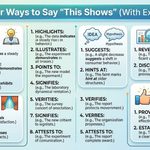
Sometimes, repeating the same phrase can make your writing feel boring or unclear. If you are searching for other ways to say this shows, you may also want other words for this show, another way to say this show, or another word for this show to keep your sentences fresh.
This guide shares simple and useful other ways to say this shows for different writing situations. You will also find helpful synonyms for this show and learn how to use this show’s alternatives naturally in essays, emails, articles, and everyday writing.
What Does “This Shows” Mean?
“This shows” is used to introduce a conclusion, observation, or piece of evidence that has just been presented. It signals that the writer is about to explain what a fact, data point, quote, or event reveals or proves.
For example: “Sales dropped by 40% in one month. This shows that the new pricing strategy failed.”
The phrase links evidence to interpretation ,it tells the reader, “here’s what this information means.”
Is It Professional/Polite to Say “This Shows”?

Yes, “this shows” is grammatically correct and perfectly acceptable in professional, academic, and everyday writing. It isn’t rude or informal. However, it is a very common, general-purpose phrase, which means it can:
- Sound repetitive if used multiple times in one document
- Lack precision, since it doesn’t specify how something shows (does it prove, suggest, hint, or confirm?)
- Read as slightly generic in high-level academic or business writing where more exact language is expected
Using varied alternatives makes writing sound more polished, confident, and specific.
Pros and Cons of “This Shows”
Pros
- Simple and universally understood
- Grammatically safe in almost any context
- Works well in spoken and informal written English
- Requires no special vocabulary knowledge
Cons
- Becomes repetitive with frequent use
- Doesn’t indicate the strength of the evidence (proof vs. suggestion)
- Can sound generic in formal academic or business writing
- Offers little nuance compared to more specific verbs
Synonyms for “This Shows”
| Synonym | Best For |
| This Demonstrates | Formal, academic writing |
| This Indicates | Data and statistics |
| This Reveals | Uncovering hidden information |
| This Highlights | Drawing attention to importance |
| This Suggests | Tentative conclusions |
| This Reflects | Mirroring a broader trend or value |
| This Proves | Strong, conclusive evidence |
| This Makes It Clear | Plain, direct communication |
| This Illustrates | Explaining with examples |
| This Confirms | Verifying an existing belief |
| This Emphasizes | Stressing importance |
| This Points To | Indirect evidence |
| This Signals | Early or warning indicators |
| This Underlines | Reinforcing a known fact |
| This Expresses | Emotions or attitudes |
| This Communicates | Conveying a message |
| This Portrays | Depicting an image or impression |
| This Represents | Symbolizing something larger |
| This Validates | Confirming correctness |
| This Clarifies | Removing confusion |
| This Explains | Giving reasons |
| This Brings Out | Revealing a quality |
| This Supports | Backing up a claim |
| This Demonstrates Clearly | Emphatic formal proof |
| This Speaks Volumes | Strong implied meaning |
1. This Demonstrates
Meaning: To clearly show or prove something through evidence or example.
Scenario: Used when presenting data, research findings, or a clear example that supports a conclusion.
Definition: “Demonstrates” means to show clearly and convincingly, often through action, evidence, or example rather than mere claim.
Best Use: Academic papers, research reports, and formal presentations.
Tone: Formal, confident, analytical.
Explanation: “This demonstrates” is a strong, evidence-based alternative to “this shows.” It works best when you have solid proof ,statistics, test results, or documented behavior ,backing your statement.
Examples:
- The survey results demonstrate a clear preference for remote work.
- This experiment demonstrates how temperature affects reaction speed.
- Her performance demonstrates years of disciplined practice.
- The case study demonstrates the risks of poor data security.
- This demonstrates why early intervention improves outcomes.
- The chart demonstrates a steady rise in customer satisfaction.
- His actions demonstrate genuine commitment to the team.
2. This Indicates
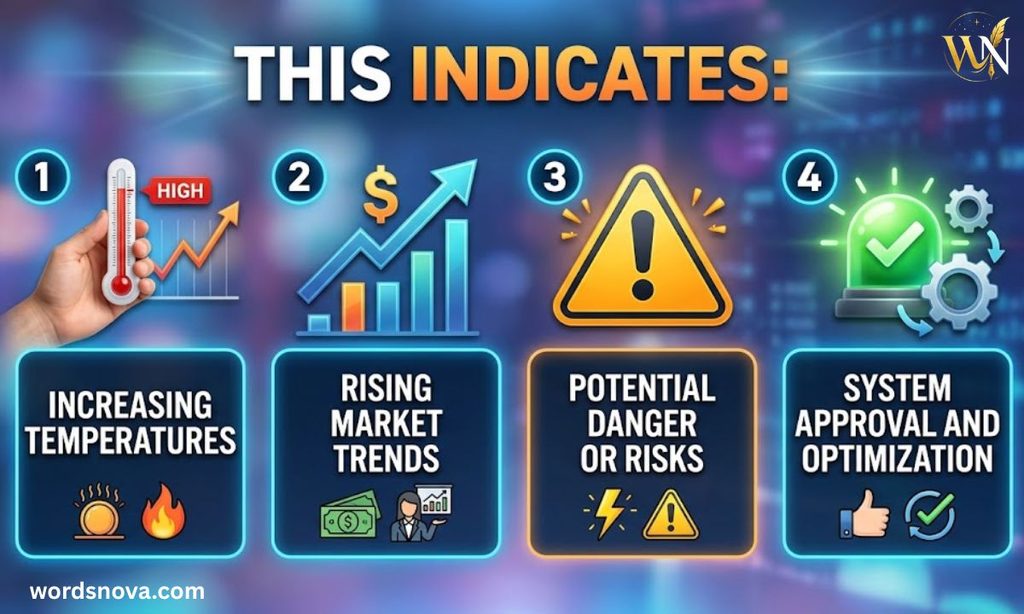
Meaning: To point toward a likely conclusion without stating it as absolute fact.
Scenario: Used when interpreting data or trends that suggest a probable outcome.
Definition: “Indicates” means to point out or signal something, often with a degree of inference rather than certainty.
Best Use: Statistical analysis, forecasting, and trend reports.
Tone: Neutral, cautious, analytical.
Explanation: “This indicates” is ideal when you’re drawing a conclusion from evidence but want to leave room for interpretation, unlike “proves,” which implies certainty.
Examples:
- The data indicates a slowdown in quarterly growth.
- This indicates that customers value speed over price.
- Rising temperatures indicate a shift in seasonal patterns.
- The results indicate room for improvement in customer service.
- This indicates a possible link between diet and energy levels.
- Low turnout indicates declining interest in the event.
- This indicates the strategy needs to be reevaluated.
3. This Reveals
Meaning: To uncover or expose something that was previously hidden or unknown.
Scenario: Used when new information brings a surprising or previously unseen fact to light.
Definition: “Reveals” means to make known something that was concealed, unclear, or not yet discovered.
Best Use: Investigative writing, research findings, storytelling.
Tone: Insightful, sometimes dramatic.
Explanation: Use “this reveals” when your evidence uncovers something not obvious at first glance ,it implies discovery, not just confirmation.
Examples:
- The audit reveals several unreported expenses.
- This reveals a gap in the company’s safety protocols.
- Her letters reveal a side of history rarely discussed.
- The scan reveals early signs of wear on the equipment.
- This reveals how deeply the policy affected small businesses.
- The interview reveals unexpected challenges faced by employees.
- This reveals a pattern investigators had missed before.
4. This Highlights
Meaning: To draw special attention to something important.
Scenario: Used when emphasizing a key point, issue, or achievement within a larger context.
Definition: “Highlights” means to make something stand out or draw focus to its significance.
Best Use: Reports, presentations, and summaries emphasizing key takeaways.
Tone: Emphatic, focused.
Explanation: “This highlights” works well when you want the reader to notice the importance of a specific detail rather than the full picture.
Examples:
- The report highlights three major risks to the project.
- This highlights the need for better employee training.
- Her speech highlights the challenges facing rural communities.
- The findings highlight a growing skills gap in tech.
- This highlights how small changes can boost efficiency.
- The review highlights strong customer loyalty.
- This highlights an urgent gap in current legislation.
5. This Suggests
Meaning: To imply a possible conclusion without stating it definitively.
Scenario: Used when evidence points toward something but isn’t fully conclusive.
Definition: “Suggests” means to propose an idea or possibility indirectly, based on available evidence.
Best Use: Hypotheses, early-stage research, cautious conclusions.
Tone: Tentative, thoughtful.
Explanation: Choose “this suggests” when you want to propose a likely explanation while acknowledging uncertainty ,it’s softer than “proves” or “confirms.”
Examples:
- The pattern suggests a link between stress and sleep quality.
- This suggests the marketing campaign may need adjustment.
- Early results suggest the treatment could be effective.
- This suggests customers are shifting toward eco-friendly products.
- The feedback suggests confusion around the new pricing plan.
- This suggests a stronger demand than initially forecasted.
- The trend suggests interest rates may rise next quarter.
6. This Reflects
Meaning: To mirror or represent a broader attitude, value, or condition.
Scenario: Used when something is a direct representation of a larger trend, culture, or mindset.
Definition: “Reflects” means to represent or be a sign of a particular condition, attitude, or situation.
Best Use: Cultural commentary, workplace culture discussions, social analysis.
Tone: Reflective, observational.
Explanation: “This reflects” is useful when connecting a specific example to a wider pattern or shared value, rather than presenting it as isolated proof.
Examples:
- The team’s dedication reflects the company’s core values.
- This reflects a broader shift toward remote-first workplaces.
- Her artwork reflects the struggles of her hometown.
- The policy reflects growing public concern over privacy.
- This reflects a change in how younger consumers shop.
- The design reflects a blend of modern and traditional styles.
- This reflects the community’s commitment to sustainability.
7. This Proves

Meaning: To establish something as true beyond doubt.
Scenario: Used when evidence is strong, direct, and conclusive.
Definition: “Proves” means to demonstrate the truth or existence of something with certainty.
Best Use: Legal writing, scientific conclusions, definitive arguments.
Tone: Assertive, confident.
Explanation: Use “this proves” only when your evidence is solid and leaves little room for doubt ,overusing it with weak evidence can undermine credibility.
Examples:
- The DNA test proves the two samples match.
- This proves the theory was correct all along.
- Her track record proves she’s ready for the promotion.
- The receipts prove the transaction took place.
- This proves the system can handle peak traffic loads.
- The witness statement proves the timeline was accurate.
- This proves consistency matters more than intensity.
8. This Makes It Clear
Meaning: To remove any ambiguity and present an obvious conclusion.
Scenario: Used when a point is so evident that no further explanation is needed.
Definition: “Makes it clear” means to present information in a way that leaves no confusion about its meaning.
Best Use: Direct communication, instructions, plain-language writing.
Tone: Direct, plain, confident.
Explanation: This phrase works well in everyday and business writing when you want to state something in the simplest, most unambiguous way possible.
Examples:
- The manager’s email makes it clear the deadline won’t change.
- This makes it clear the project needs more resources.
- Her tone makes it clear she disagrees with the decision.
- The contract makes it clear who owns the intellectual property.
- This makes it clear why the meeting was rescheduled.
- The results make it clear which option performed better.
- This makes it clear that safety comes first.
9. This Illustrates
Meaning: To explain or clarify something using a specific example.
Scenario: Used when a concrete example helps explain an abstract idea.
Definition: “Illustrates” means to explain or make something understandable by using an example, picture, or story.
Best Use: Teaching, explanatory writing, case studies.
Tone: Explanatory, instructive.
Explanation: “This illustrates” is perfect when you’re using a specific case to make a broader concept easier to grasp.
Examples:
- This illustrates how small habits lead to big results.
- The graph illustrates the impact of inflation on wages.
- Her story illustrates the power of persistence.
- This illustrates why communication matters in teams.
- The case illustrates common mistakes new investors make.
- This illustrates how quickly trends can change.
- The diagram illustrates the entire workflow clearly.
10. This Confirms
Meaning: To verify that something previously believed or suspected is true.
Scenario: Used when new evidence supports an existing assumption or hypothesis.
Definition: “Confirms” means to establish the truth of something that was previously uncertain or assumed.
Best Use: Research validation, fact-checking, follow-up reports.
Tone: Assured, validating.
Explanation: Use “this confirms” when your findings align with and strengthen an earlier belief, rather than introducing something entirely new.
Examples:
- The second test confirms the initial diagnosis.
- This confirms our suspicions about the faulty wiring.
- Her report confirms the budget estimates were accurate.
- The audit confirms all transactions were properly recorded.
- This confirms the product meets safety standards.
- The follow-up survey confirms earlier customer feedback.
- This confirms the strategy is working as planned.
11. This Emphasizes

Meaning: To stress the importance or seriousness of something.
Scenario: Used when a point deserves extra weight or urgency in the discussion.
Definition: “Emphasizes” means to give special importance or force to a particular point.
Best Use: Persuasive writing, warnings, key recommendations.
Tone: Serious, persuasive.
Explanation: “This emphasizes” is useful when you want readers to recognize that a particular fact carries more weight than surrounding details.
Examples:
- This emphasizes the importance of regular maintenance.
- Her testimony emphasizes the need for stricter oversight.
- The report emphasizes rising costs as the main concern.
- This emphasizes why backups are essential for data safety.
- The coach’s feedback emphasizes teamwork over individual stats.
- This emphasizes the urgency of climate action.
- The findings emphasize the value of early diagnosis.
12. This Points To
Meaning: To indirectly suggest a cause, direction, or conclusion.
Scenario: Used when evidence hints at something without fully proving it.
Definition: “Points to” means to indicate or suggest something, often as one of several contributing factors.
Best Use: Investigative analysis, forecasting, diagnostic reasoning.
Tone: Analytical, exploratory.
Explanation: This phrase works well when multiple clues collectively hint at a conclusion, without offering absolute certainty.
Examples:
- The evidence points to human error as the main cause.
- This points to a growing demand for flexible work hours.
- Her symptoms point to a possible vitamin deficiency.
- The data points to declining engagement on social media.
- This points to a need for updated safety regulations.
- The pattern points to seasonal fluctuations in sales.
- This points to inconsistent training across departments.
13. This Signals
Meaning: To indicate an early sign of change or a coming trend.
Scenario: Used when something hints at a shift before it fully happens.
Definition: “Signals” means to give an early indication or warning of something.
Best Use: Market analysis, trend forecasting, business strategy.
Tone: Alert, forward-looking.
Explanation: “This signals” is ideal for describing early indicators, especially in business or economic contexts where trends matter.
Examples:
- The layoffs signal deeper financial trouble at the company.
- This signals a shift toward sustainable packaging.
- Rising applications signal growing interest in the program.
- This signals the start of a new competitive era.
- Her resignation signals internal disagreements at the top.
- This signals that consumer confidence is returning.
- The new policy signals a change in leadership priorities.
14. This Underlines
Meaning: To reinforce or draw attention to a fact already known.
Scenario: Used when restating the importance of something already established.
Definition: “Underlines” means to emphasize or stress the significance of a point.
Best Use: Formal reports, summaries, closing arguments.
Tone: Firm, reinforcing.
Explanation: Similar to “emphasizes,” but often used when reinforcing something already discussed rather than introducing a new point.
Examples:
- This underlines the importance of clear communication.
- The results underline the need for continued investment.
- Her dedication underlines what strong leadership looks like.
- This underlines why deadlines should never be ignored.
- The incident underlines gaps in the current safety plan.
- This underlines the value of consistent customer service.
- The study underlines long-term benefits of regular exercise.
15. This Expresses

Meaning: To convey a feeling, opinion, or attitude.
Scenario: Used when describing emotional or subjective content rather than hard facts.
Definition: “Expresses” means to communicate a thought, feeling, or opinion clearly.
Best Use: Personal writing, reviews, emotional or opinion-based content.
Tone: Personal, expressive.
Explanation: Choose “this expresses” when the focus is on emotion or opinion rather than factual proof.
Examples:
- This expresses genuine concern for employee wellbeing.
- Her letter expresses gratitude for the team’s support.
- The mural expresses pride in the local community.
- This expresses frustration with the slow approval process.
- The song expresses hope during difficult times.
- This expresses a shared vision for the company’s future.
- His feedback expresses appreciation for the extra effort.
16. This Communicates
Meaning: To convey a message, idea, or intention clearly to an audience.
Scenario: Used when discussing how information or intent is being conveyed.
Definition: “Communicates” means to share or transmit information, ideas, or feelings effectively.
Best Use: Marketing, branding, workplace communication.
Tone: Clear, purposeful.
Explanation: “This communicates” is useful when discussing intentional messaging, such as branding, tone, or design choices.
Examples:
- This communicates professionalism to potential clients.
- The logo communicates trust and reliability.
- Her tone communicates confidence, not arrogance.
- This communicates a clear commitment to quality.
- The email communicates the new policy effectively.
- This communicates urgency without causing panic.
- The design communicates simplicity and modern style.
17. This Portrays
Meaning: To depict or represent someone or something in a particular way.
Scenario: Used when describing how a person, group, or idea is presented.
Definition: “Portrays” means to describe or depict something in a specific manner, often through writing, art, or media.
Best Use: Media analysis, character description, branding.
Tone: Descriptive, interpretive.
Explanation: Use “this portrays” when focusing on the impression or image being created, rather than factual proof.
Examples:
- This portrays the company as innovative and forward-thinking.
- The film portrays the challenges of small-town life.
- Her writing portrays resilience in the face of hardship.
- This portrays leadership as calm under pressure.
- The campaign portrays the brand as approachable and honest.
- This portrays a very different picture than the headlines suggest.
- The photo portrays the true scale of the damage.
18. This Represents
Meaning: To stand for or symbolize something larger.
Scenario: Used when a single example embodies a broader idea, group, or value.
Definition: “Represents” means to serve as a symbol or embodiment of something else.
Best Use: Symbolic writing, branding, statistical summaries.
Tone: Symbolic, formal.
Explanation: “This represents” works well when connecting a specific detail to a larger category, meaning, or milestone.
Examples:
- This represents a major milestone for the company.
- The award represents years of hard work and dedication.
- Her promotion represents growing trust in her leadership.
- This represents a shift in how the industry operates.
- The statue represents the town’s founding history.
- This represents the largest investment in company history.
- The color scheme represents the brand’s core identity.
19. This Validates

Meaning: To confirm that something is correct, reasonable, or justified.
Scenario: Used when evidence supports a previous decision, feeling, or claim.
Definition: “Validates” means to officially confirm or support the accuracy or worth of something.
Best Use: Feedback, decision-making, research confirmation.
Tone: Supportive, confirming.
Explanation: Use “this validates” when acknowledging that evidence supports a choice, belief, or emotion that was already present.
Examples:
- This validates the decision to switch suppliers.
- Her success validates years of hard work and sacrifice.
- The results validate the team’s original hypothesis.
- This validates customer concerns raised last quarter.
- The feedback validates the need for a redesign.
- This validates our approach to remote onboarding.
- The data validates the investment in new equipment.
20. This Clarifies
Meaning: To make something easier to understand by removing confusion.
Scenario: Used when explaining something that was previously unclear or misunderstood.
Definition: “Clarifies” means to make a statement or situation clearer and easier to understand.
Best Use: Instructions, corrections, FAQs.
Tone: Helpful, explanatory.
Explanation: “This clarifies” is best used when correcting confusion or adding detail that resolves misunderstanding.
Examples:
- This clarifies the confusion around the refund policy.
- Her explanation clarifies how the process actually works.
- The updated guide clarifies each step in detail.
- This clarifies who is responsible for the final approval.
- The FAQ clarifies common misunderstandings about pricing.
- This clarifies the timeline for the upcoming launch.
- The memo clarifies expectations for remote employees.
21. This Explains
Meaning: To give reasons or a cause for something.
Scenario: Used when connecting a cause to its effect or outcome.
Definition: “Explains” means to make something clear by describing it in more detail or giving reasons.
Best Use: Cause-and-effect writing, troubleshooting, reports.
Tone: Informative, straightforward.
Explanation: Use “this explains” when directly linking a cause to an outcome the reader may not have understood before.
Examples:
- This explains why the server crashed last night.
- Her background explains her passion for education.
- The report explains the reasons behind the delay.
- This explains the sudden increase in website traffic.
- The manual explains how to reset the device.
- This explains why customer complaints dropped sharply.
- The study explains the link between sleep and focus.
22. This Brings Out
Meaning: To reveal or highlight a particular quality or characteristic.
Scenario: Used when something draws out a hidden or subtle trait.
Definition: “Brings out” means to make a quality, feature, or emotion more noticeable or apparent.
Best Use: Reviews, character analysis, descriptive writing.
Tone: Descriptive, appreciative.
Explanation: This phrase is useful for describing how a situation reveals someone’s or something’s underlying qualities.
Examples:
- This brings out the best in every team member.
- The crisis brings out her natural leadership skills.
- This brings out subtle flavors in the dish.
- The lighting brings out the details in the painting.
- This brings out a competitive side in employees.
- The challenge brings out creativity in unexpected ways.
- This brings out the true value of teamwork.
23. This Supports

Meaning: To back up or strengthen a claim, argument, or idea.
Scenario: Used when evidence reinforces an existing argument.
Definition: “Supports” means to provide evidence or reasons that strengthen a claim or position.
Best Use: Argumentative essays, research papers, proposals.
Tone: Reasoned, evidence-based.
Explanation: “This supports” works well in structured arguments where you’re building a case using multiple pieces of evidence.
Examples:
- This supports the argument for a four-day workweek.
- The data supports our decision to expand overseas.
- Her research supports the theory of gradual change.
- This supports the need for updated training materials.
- The testimony supports the defendant’s version of events.
- This supports the case for increased funding.
- The results support earlier findings from last year.
24. This Demonstrates Clearly
Meaning: A stronger, more emphatic version of “demonstrates,” used for undeniable proof.
Scenario: Used when the evidence is especially strong and leaves no room for doubt.
Definition: “Demonstrates clearly” means to show something in an obvious, unmistakable, and convincing way.
Best Use: Conclusive arguments, executive summaries, formal proof.
Tone: Strong, definitive.
Explanation: Add “clearly” when you want to emphasize that the evidence isn’t just present, but obvious and convincing.
Examples:
- This demonstrates clearly that the new process saves time.
- The numbers demonstrate clearly where costs are rising.
- Her results demonstrate clearly why she earned the award.
- This demonstrates clearly how training improves performance.
- The footage demonstrates clearly what caused the accident.
- This demonstrates clearly the value of early planning.
- The comparison demonstrates clearly which option is better.
25. This Speaks Volumes

Meaning: To imply a strong, often unspoken meaning without needing further explanation.
Scenario: Used when an action or fact says more than words could.
Definition: “Speaks volumes” is an idiom meaning that something reveals a great deal, even without being directly stated.
Best Use: Persuasive writing, storytelling, opinion pieces.
Tone: Expressive, impactful.
Explanation: This idiomatic phrase works well in less formal or persuasive writing when the implication is powerful enough to speak for itself.
Examples:
- Her silence speaks volumes about how she really feels.
- This speaks volumes about the company’s true priorities.
- The empty office speaks volumes about low morale.
- This speaks volumes about his dedication to the cause.
- The turnout speaks volumes about community support.
- This speaks volumes about the brand’s commitment to quality.
- His quick response speaks volumes about his work ethic.
Frequently Asked Questions
What are other ways to say this shows?
Other ways to say this shows include “this indicates,” “this demonstrates,” and “this suggests.” These phrases make your writing clearer and help you avoid repeating the same words.
What is another way to say this shows?
Another way to say this shows is “this reveals.” You can also use “this proves,” “this indicates,” or “this highlights” depending on the meaning and context.
What are other words for this show?
Other words for this show include “indicates,” “demonstrates,” “reveals,” “suggests,” and “highlights.” These choices can make sentences sound more natural, professional, and interesting.
What is another word for this show?
Another word for this show can be “indicates” or “demonstrates.” Choose the word that best matches your sentence, tone, and intended meaning for clearer writing.
What are synonyms for these shows?
Common synonyms for this show include “this indicates,” “this demonstrates,” “this reveals,” and “this suggests.” These alternatives are useful when you want varied and polished writing.
How can I use other ways to say this shows?
You can use other ways to say this shows when writing essays, reports, emails, or articles. Pick an alternative that naturally matches your sentence and message.
Which other ways to say this shows sound professional?
Professional options include “this indicates,” “this demonstrates,” and “this highlights.” Other ways to say this shows can make formal writing sound clearer, smoother, and more confident.
What can I use instead of this shows?
Instead of this shows, you can write “this suggests,” “this reveals,” or “this indicates.” These phrases help express evidence, meaning, or results without unnecessary repetition.
When should I use other ways to say this shows?
Use other ways to say this shows when you want to avoid repeated wording. They are helpful in academic, professional, and everyday writing situations.
Why learn other ways to say this shows?
Learning other ways to say this shows improves vocabulary and makes writing more flexible. It also helps you choose expressions that fit different tones and situations.
Conclusion
Using other ways to say this shows can make your writing clearer and more natural. The right phrase depends on your sentence and tone. You can use other words for this shows when you want to avoid repetition. If you need another way to say this shows, choose a phrase that fits your meaning. You can also use another word for this shows in formal or simple writing. These options help your sentences sound fresh and professional.
Learning synonyms for this shows can also improve your vocabulary. They are useful in essays, emails, reports, and everyday writing. When you need other ways to say this shows, pick words that clearly explain your point. You can replace this shows with a suitable phrase without changing your meaning. With these alternatives, your writing can feel smoother, clearer, and more engaging.