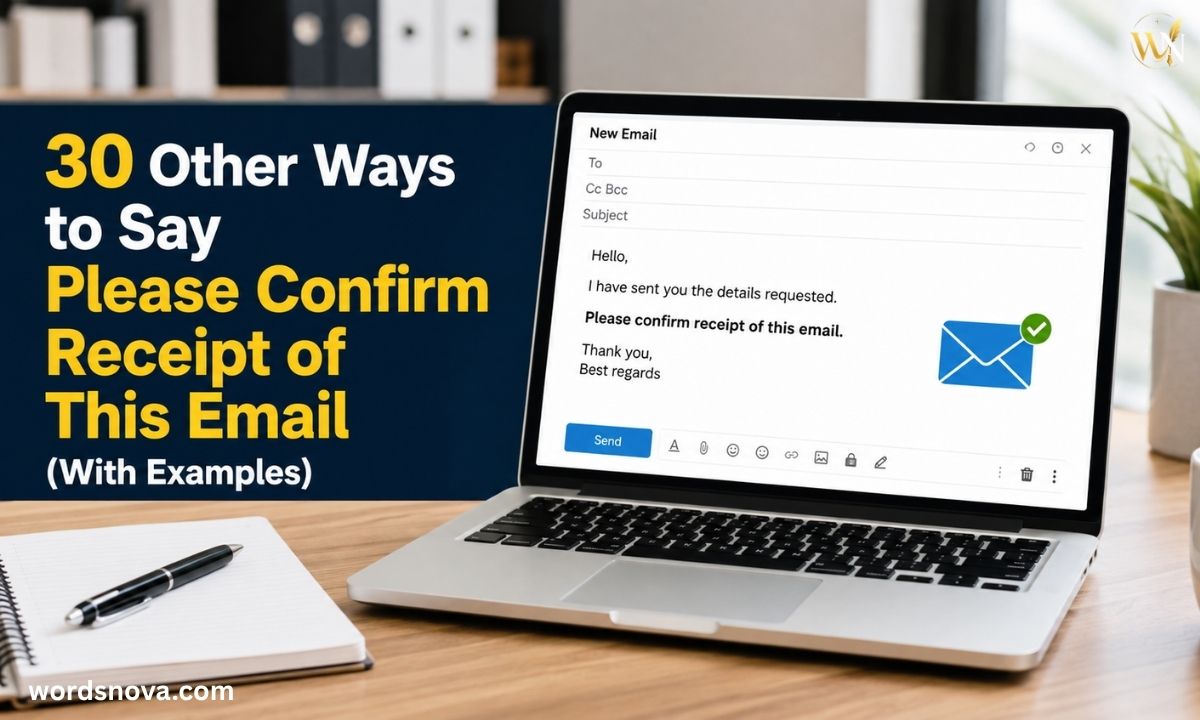
Sometimes, you send an important email and wait for a reply, wondering if the other person received it. You may write “please confirm receipt of this email” and want to understand the “please confirm receipt of this email.” You might also say “confirm receipt of email,” “please acknowledge receipt of this email,” or simply “please acknowledge.” Other Ways to Say Please Confirm Receipt of This Email can help you choose better words.
This guide shares Other Ways to Say Please Confirm Receipt of This Email that sound polite, professional, and natural. You will find simple alternatives and helpful examples for different situations. Keep reading to choose the right phrase and make your email communication clear and effective.
What Does “Please Confirm Receipt of This Email” Mean?
“Please confirm receipt of this email” is a request for the recipient to reply and verify that your message has arrived in their inbox and been opened or read. “Receipt” here doesn’t mean a payment receipt , it means the act of receiving something.
In plain terms, the sender is saying: “I want proof that this email reached you, so please write back and let me know.” It’s commonly used in business, legal, HR, and administrative communication where it matters that a message didn’t get lost, ignored, or buried in spam.
The phrase itself is neutral. It doesn’t ask for an opinion, an action, or feedback on the content , only an acknowledgment that the email was received.
When to Use “Please Confirm Receipt of This Email”
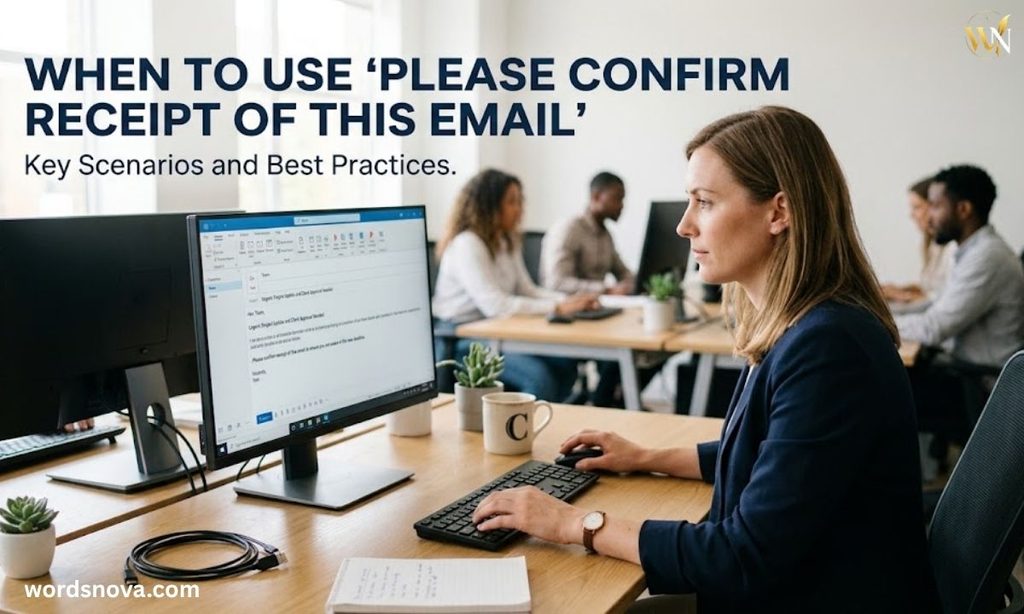
This phrase (or one of its alternatives) is most useful in situations where silence could cause a real problem. Common scenarios include:
- Sending important documents:contracts, invoices, legal notices, or official reports where you need proof of delivery.
- Time-sensitive communication:deadlines, meeting changes, or urgent instructions where you can’t afford the message to go unnoticed.
- Formal business correspondence:client onboarding, vendor agreements, or compliance-related emails.
- HR and internal company communication:policy updates, offer letters, or announcements that employees are expected to read.
- Follow-ups after a call or meeting:confirming that a summary or action items were received correctly.
If the stakes of the message are low , a casual FYI or a routine internal note , asking for confirmation can come across as unnecessary. Save it for messages where a missed read could actually cause a delay, mistake, or dispute.
Is It Professional/Polite to Say “Please Confirm Receipt of This Email”?
Yes, it’s professional and perfectly polite , but it can feel a little formal and impersonal, especially in modern workplace communication that leans more conversational. It’s the kind of phrase that fits well in legal, government, or formal corporate settings, but can feel slightly cold in a quick email to a colleague or a long-term client you know well.
The tone isn’t rude; it’s simply neutral and businesslike. If you want to soften it, adding a word like “kindly” or “please” (as in “kindly confirm receipt”) makes it feel more courteous. If you want to sound warmer and more personable, swapping it for a phrase like “just let me know you got this” achieves the same goal in a friendlier tone.
In short: it’s safe to use in almost any professional context, but it isn’t your only option , and varying your phrasing keeps your emails from sounding like templates.
Synonyms for “Please Confirm Receipt of This Email”
Here’s a quick-reference table of all 30 alternatives, along with their general tone and best use case, before we look at each one in detail.
| # | Phrase | Tone | Best Used For |
| 1 | Kindly Confirm You Have Received This Email | Formal, polite | Business correspondence |
| 2 | Please Acknowledge Receipt | Formal, direct | Legal or official documents |
| 3 | Can You Confirm You Received This Email? | Neutral, conversational | Everyday work emails |
| 4 | I’d Appreciate Your Confirmation | Polite, warm | Client or vendor emails |
| 5 | Kindly Let Me Know You’ve Received This | Friendly, courteous | Internal team communication |
| 6 | Please Confirm at Your Earliest Convenience | Formal, time-sensitive | Deadline-driven requests |
| 7 | Could You Kindly Confirm the Receipt? | Polite, formal | Requests to senior contacts |
| 8 | I’m Checking to See If You Received This | Casual, conversational | Informal follow-ups |
| 9 | Just Wanted to Confirm You Received This | Friendly, low-pressure | Colleague or peer emails |
| 10 | Please Let Me Know When You Receive This | Neutral, practical | Document or file delivery |
| 11 | A Quick Confirmation Would Be Appreciated | Polite, brief | Short professional requests |
| 12 | Please Verify That You’ve Received This Email | Formal, precise | Compliance or legal contexts |
| 13 | Could You Confirm This Email Reached You? | Conversational, polite | Everyday business use |
| 14 | Please Let Me Know You Got This | Casual, friendly | Team or peer messages |
| 15 | Kindly Confirm at Your Convenience | Formal, relaxed pace | Non-urgent requests |
| 16 | Please Confirm Receipt When Possible | Neutral, flexible | General follow-ups |
| 17 | I Would Be Grateful for Your Confirmation | Formal, gracious | Senior or external contacts |
| 18 | Please Confirm You’ve Got This | Casual, direct | Quick internal checks |
| 19 | Just Checking If This Reached You | Casual, friendly | Informal reminders |
| 20 | I’m Following Up for Confirmation | Neutral, professional | Second-attempt follow-ups |
| 21 | Please Confirm This Reached You Safely | Warm, considerate | Sensitive or important documents |
| 22 | Can You Give Me a Quick Confirmation? | Casual, efficient | Fast-paced work environments |
| 23 | Please Let Me Know It Reached You | Simple, neutral | General correspondence |
| 24 | Kindly Confirm Receipt at Your Convenience | Formal, patient | Non-urgent formal requests |
| 25 | I Just Need Your Confirmation | Direct, efficient | Quick administrative tasks |
| 26 | Could You Kindly Let Me Know You Received This? | Polite, formal | Client-facing emails |
| 27 | Please Confirm You Have Received My Message | Neutral, formal | Standard business use |
| 28 | I Would Appreciate a Quick Acknowledgment | Polite, professional | Requests to management |
| 29 | Confirming Receipt Would Be Helpful | Soft, courteous | Collaborative team settings |
| 30 | Please Reply to Confirm Receipt | Direct, formal | Clear call-to-action emails |
1. Kindly Confirm You Have Received This Email
Meaning: A polished, courteous request asking the recipient to verify the email has landed in their inbox.
Scenario: You’ve just emailed a signed proposal to a new external client and want a courteous, on-record acknowledgment before you move forward.
Best Use: Formal business emails, especially to clients or external partners where extra courtesy matters.
Tone: Formal and respectful.
This phrase softens the request with “kindly,” which makes it sound less like an instruction and more like a polite ask. It works well when you’re emailing someone outside your organization or someone senior to you.
Examples:
- Kindly confirm you have received this email along with the attached proposal.
- Kindly confirm you have received this email so we can proceed with scheduling.
- Kindly confirm you have received this email before Friday’s meeting.
- Kindly confirm you have received this email regarding the updated contract terms.
- Kindly confirm you have received this email; a quick reply is all we need.
- Kindly confirm you have received this email so our records stay up to date.
2. Please Acknowledge Receipt
Meaning: A short, formal instruction asking someone to officially confirm that a document or message has arrived.
Scenario: Your legal team sends a formal notice or signed agreement and needs documented proof that the other party received it.
Best Use: Legal notices, compliance documents, or official correspondence where a clear paper trail is required.
Tone: Formal and direct.
“Acknowledge receipt” is common in legal and administrative English. It’s brief, unambiguous, and works best when precision matters more than warmth.
Examples:
- Please acknowledge receipt of the signed agreement by end of day.
- Please acknowledge receipt of this notice within 48 hours.
- Please acknowledge receipt so we can close out this file.
- Please acknowledge receipt of the enclosed invoice.
- Please acknowledge receipt of your updated employment contract.
- Please acknowledge receipt of the shipment documentation attached.
3. Can You Confirm You Received This Email?
Meaning: A direct question that invites a simple yes/no response confirming delivery.
Scenario: You’ve sent routine meeting notes to a colleague and simply want a quick, natural check that it landed in their inbox.
Best Use: Everyday professional emails where you want a natural, conversational request rather than a stiff command.
Tone: Neutral and conversational.
Phrasing it as a question rather than a statement makes it feel less demanding, which suits routine workplace communication.
Examples:
- Can you confirm you received this email with the meeting notes attached?
- Can you confirm you received this email before I follow up with the client?
- Can you confirm you received this email and the revised timeline?
- Can you confirm you received this email so I can mark the task complete?
- Can you confirm you received this email about tomorrow’s call?
- Can you confirm you received this email from earlier today?
4. I’d Appreciate Your Confirmation
Meaning: A polite way of saying you’d value the recipient taking a moment to confirm receipt.
Scenario: You’ve shared a vendor quote and want to politely nudge them for a reply without sounding pushy.
Best Use: Emails to clients, vendors, or anyone you want to thank in advance for the small effort of replying.
Tone: Polite and warm.
This version leads with appreciation rather than instruction, which reads as considerate without sounding overly formal.
Examples:
- I’d appreciate your confirmation once you’ve reviewed the attached file.
- I’d appreciate your confirmation so we can move forward with the order.
- I’d appreciate your confirmation before we finalize the schedule.
- I’d appreciate your confirmation on receipt of the revised quote.
- I’d appreciate your confirmation at your earliest opportunity.
- I’d appreciate your confirmation so I know the package arrived safely.
5. Kindly Let Me Know You’ve Received This
Meaning: A courteous, slightly informal way to ask for a quick acknowledgment.
Scenario: You’ve sent an internal update to your team and want a casual, friendly nudge to make sure everyone saw it.
Best Use: Internal team emails or communication with familiar colleagues.
Tone: Friendly and courteous.
This phrasing feels approachable while still being professional, making it a good fit for day-to-day internal messages.
Examples:
- Kindly let me know you’ve received this before our call tomorrow.
- Kindly let me know you’ve received this so I can update the tracker.
- Kindly let me know you’ve received this and if anything looks off.
- Kindly let me know you’ve received this so we’re on the same page.
- Kindly let me know you’ve received this whenever you get a chance.
- Kindly let me know you’ve received this ahead of the deadline.
6. Please Confirm at Your Earliest Convenience
Meaning: A formal request to confirm receipt as soon as reasonably possible, without setting a hard deadline.
Scenario: You’ve sent scheduling details for an event and need a response soon, but not necessarily within the hour.
Best Use: Time-sensitive but not urgent requests, such as document reviews or scheduling confirmations.
Tone: Formal and time-conscious.
This phrase signals priority without pressuring the recipient with a strict cutoff, which makes it useful when you need a timely , but not immediate , response.
Examples:
- Please confirm at your earliest convenience so we can lock in the dates.
- Please confirm at your earliest convenience as the deadline is approaching.
- Please confirm at your earliest convenience to avoid any delays.
- Please confirm at your earliest convenience once you’ve reviewed the terms.
- Please confirm at your earliest convenience so we can proceed accordingly.
- Please confirm at your earliest convenience; your input is needed soon.
7. Could You Kindly Confirm Receipt?
Meaning: A gentle, formal question that softens the request with “kindly.”
Scenario: You’re emailing a senior executive or board member and want to request confirmation as respectfully as possible.
Best Use: Emails to senior contacts, executives, or anyone you want to address with extra deference.
Tone: Polite and formal.
Framing the request as a question (“could you”) rather than a command makes it feel considerate, which suits higher-stakes or hierarchical relationships.
Examples:
- Could you kindly confirm receipt of the attached report?
- Could you kindly confirm receipt when you have a moment?
- Could you kindly confirm receipt so we can proceed with approval?
- Could you kindly confirm receipt of the signed documents?
- Could you kindly confirm receipt before the board meeting?
- Could you kindly confirm receipt at your convenience?
8. I’m Checking to See If You Received This
Meaning: An informal way of following up to make sure a previous message didn’t go unnoticed.
Scenario: You sent a file yesterday and haven’t heard back, so you’re sending a light, informal nudge to check in.
Best Use: Casual follow-ups with coworkers or contacts you communicate with regularly.
Tone: Casual and conversational.
This phrase works well as a gentle nudge rather than a formal demand, especially in ongoing email threads.
Examples:
- I’m checking to see if you received this , no rush, just following up.
- I’m checking to see if you received this before our meeting today.
- I’m checking to see if you received this since I haven’t heard back.
- I’m checking to see if you received this file I sent yesterday.
- I’m checking to see if you received this update on the project.
- I’m checking to see if you received this in case it landed in spam.
9. Just Wanted to Confirm You Received This
Meaning: A relaxed, low-pressure way to ask for acknowledgment.
Scenario: You’re messaging a coworker you know well and want a low-key way to make sure your last email didn’t get missed.
Best Use: Peer-to-peer or colleague emails where a casual tone fits the relationship.
Tone: Friendly and low-pressure.
Starting with “just wanted to” takes the edge off the request, making it feel more like a courtesy check-in than a formal demand.
Examples:
- Just wanted to confirm you received this before I close out the ticket.
- Just wanted to confirm you received this , let me know if not.
- Just wanted to confirm you received this ahead of tomorrow’s sync.
- Just wanted to confirm you received this along with the invoice.
- Just wanted to confirm you received this so we’re aligned going forward.
- Just wanted to confirm you received this update on the client account.
10. Please Let Me Know When You Receive This
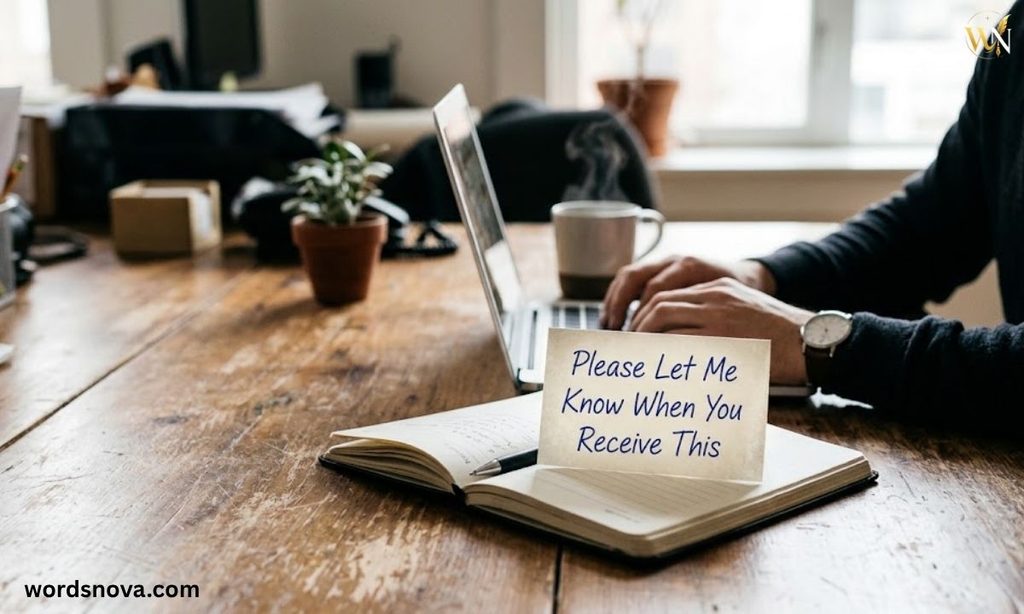
Meaning: A practical, neutral request focused on the moment of delivery rather than a formal acknowledgment process.
Scenario: You’ve sent a large file or document and want to know the exact moment it arrives so you can plan next steps.
Best Use: Sending files, documents, or packages where timing matters.
Tone: Neutral and practical.
This version is useful when you specifically care about when the message arrives, not just that it eventually does.
Examples:
- Please let me know when you receive this so I can notify the team.
- Please let me know when you receive this document.
- Please let me know when you receive this so we can start the review.
- Please let me know when you receive this file for processing.
- Please let me know when you receive this before end of business.
- Please let me know when you receive this so I can close the loop.
11. A Quick Confirmation Would Be Appreciated
Meaning: A polite, brief request that frames the reply as a small favor rather than an obligation.
Scenario: You’re wrapping up a short email and want a brief, polite closing line asking for a reply.
Best Use: Short professional emails where you want to keep things light but still get a response.
Tone: Polite and brief.
This phrasing works well at the end of an email as a closing line, since it’s compact and doesn’t feel demanding.
Examples:
- A quick confirmation would be appreciated once you’ve had a chance to review.
- A quick confirmation would be appreciated so we can finalize the order.
- A quick confirmation would be appreciated before we proceed further.
- A quick confirmation would be appreciated at your convenience.
- A quick confirmation would be appreciated so I can update our records.
- A quick confirmation would be appreciated whenever you’re free.
12. Please Verify That You’ve Received This Email
Meaning: A formal request emphasizing accuracy and verification, not just a simple acknowledgment.
Scenario: You’re in a compliance or audit process and need documented proof that the recipient received specific paperwork.
Best Use: Compliance, legal, or audit-related correspondence where precision is important.
Tone: Formal and precise.
“Verify” carries a slightly stronger sense of confirmation than “confirm,” making this phrase useful when accuracy needs to be documented.
Examples:
- Please verify that you’ve received this email and its attachments.
- Please verify that you’ve received this email before submitting your response.
- Please verify that you’ve received this email for compliance purposes.
- Please verify that you’ve received this email containing the audit report.
- Please verify that you’ve received this email so we can proceed with the review.
- Please verify that you’ve received this email regarding your account details.
13. Could You Confirm This Email Reached You?
Meaning: A polite, conversational question checking whether the message successfully arrived.
Scenario: You’re checking in with a client mid-project and want a natural, professional way to confirm your last email arrived.
Best Use: Everyday business communication that still needs a professional tone.
Tone: Conversational and polite.
This phrasing feels natural in spoken-style writing, making it a good fit for emails to colleagues or familiar clients.
Examples:
- Could you confirm this email reached you before I follow up again?
- Could you confirm this email reached you along with the attachment?
- Could you confirm this email reached you okay?
- Could you confirm this email reached you in time for the deadline?
- Could you confirm this email reached you, since I haven’t had a reply?
- Could you confirm this email reached you this morning?
14. Please Let Me Know You Got This
Meaning: A short, casual way of asking someone to confirm they’ve seen your message.
Scenario: You’re messaging a teammate on a fast-moving project and just need a quick ‘got it’ before you proceed.
Best Use: Team chats-turned-emails or quick internal messages between colleagues.
Tone: Casual and friendly.
This is one of the more relaxed alternatives, ideal for fast-moving, informal workplace communication.
Examples:
- Please let me know you got this so I can move on to the next step.
- Please let me know you got this before the call starts.
- Please let me know you got this , just a quick thumbs up works.
- Please let me know you got this file when you can.
- Please let me know you got this so we’re both on the same page.
- Please let me know you got this update on the schedule.
15. Kindly Confirm at Your Convenience
Meaning: A polite, unhurried request for acknowledgment with no fixed deadline.
Scenario: You’ve sent a non-urgent update and want to politely ask for confirmation whenever the recipient has time.
Best Use: Non-urgent requests where you want to remain courteous and patient.
Tone: Formal but relaxed.
This phrase communicates that a reply is welcome but not time-critical, which helps avoid sounding pushy.
Examples:
- Kindly confirm at your convenience once you’ve reviewed the documents.
- Kindly confirm at your convenience so we can update our files.
- Kindly confirm at your convenience; there’s no immediate rush.
- Kindly confirm at your convenience before the end of the month.
- Kindly confirm at your convenience so we can proceed accordingly.
- Kindly confirm at your convenience whenever suits your schedule.
16. Please Confirm Receipt When Possible
Meaning: A flexible request for acknowledgment that doesn’t impose strict timing.
Scenario: You’re following up on a routine matter and want confirmation eventually, without pressuring for an immediate reply.
Best Use: General follow-ups where the sender wants confirmation but isn’t in a hurry.
Tone: Neutral and flexible.
This is a good middle-ground phrase , professional, but not as urgent-sounding as “as soon as possible.”
Examples:
- Please confirm receipt when possible so I can update the file.
- Please confirm receipt when possible; there’s no strict deadline.
- Please confirm receipt when possible after reviewing the attachment.
- Please confirm receipt when possible so our records are accurate.
- Please confirm receipt when possible over the next day or two.
- Please confirm receipt when possible ahead of next week’s meeting.
17. I Would Be Grateful for Your Confirmation
Meaning: A formal, gracious way of requesting acknowledgment that leads with appreciation.
Scenario: You’re emailing a business partner or higher-up and want to request confirmation with extra humility and respect.
Best Use: Emails to senior leadership, external stakeholders, or formal business partners.
Tone: Formal and gracious.
This phrase adds a layer of humility and respect, which can be especially effective when addressing someone with more authority or seniority.
Examples:
- I would be grateful for your confirmation once you’ve reviewed the proposal.
- I would be grateful for your confirmation before we proceed to the next stage.
- I would be grateful for your confirmation on the revised terms.
- I would be grateful for your confirmation at your earliest opportunity.
- I would be grateful for your confirmation so we can finalize arrangements.
- I would be grateful for your confirmation regarding the enclosed documents.
18. Please Confirm You’ve Got This
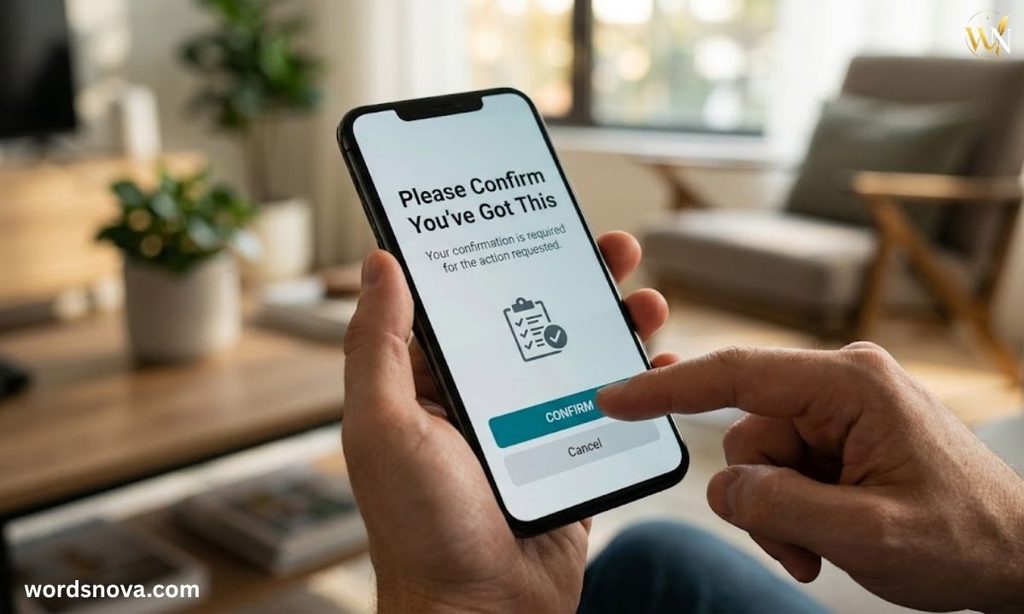
Meaning: A short, direct request that assumes familiarity between sender and recipient.
Scenario: You’re pinging a coworker in a quick internal thread and just need a fast, informal confirmation.
Best Use: Quick internal checks between coworkers who already have an established rapport.
Tone: Casual and direct.
This phrase is efficient and to the point, suited to fast internal communication rather than external or formal emails.
Examples:
- Please confirm you’ve got this so I can check it off my list.
- Please confirm you’ve got this before you head into the meeting.
- Please confirm you’ve got this , a quick reply is fine.
- Please confirm you’ve got this file for tomorrow’s presentation.
- Please confirm you’ve got this so I know to proceed.
- Please confirm you’ve got this update from earlier.
19. Just Checking If This Reached You
Meaning: A gentle, informal reminder used when you suspect a message may have been missed.
Scenario: You sent something last week and haven’t heard anything, so you’re sending a soft, friendly reminder.
Best Use: Casual follow-up emails, especially after a period of silence.
Tone: Casual and friendly.
This phrase works well as a soft nudge that doesn’t pressure the recipient, ideal for maintaining a friendly tone while still following up.
Examples:
- Just checking if this reached you , happy to resend if needed.
- Just checking if this reached you since I haven’t heard back yet.
- Just checking if this reached you before our meeting later today.
- Just checking if this reached you okay on your end.
- Just checking if this reached you, as it’s a bit time-sensitive.
- Just checking if this reached you last week.
20. I’m Following Up for Confirmation
Meaning: A professional way to indicate this is a second attempt to get acknowledgment.
Scenario: You already asked for confirmation once and are now following up a second time after getting no response.
Best Use: Follow-up emails after an initial message received no response.
Tone: Neutral and professional.
This phrase clearly signals that it’s a follow-up, which helps set the right context without sounding impatient.
Examples:
- I’m following up for confirmation on the email sent last Tuesday.
- I’m following up for confirmation since I haven’t received a reply yet.
- I’m following up for confirmation before we move forward with the plan.
- I’m following up for confirmation regarding the attached contract.
- I’m following up for confirmation ahead of the upcoming deadline.
- I’m following up for confirmation on the documents I shared earlier.
21. Please Confirm This Reached You Safely
Meaning: A warm, considerate way to ask for acknowledgment, often used for sensitive or important materials.
Scenario: You’ve sent confidential contracts or sensitive files and want to gently confirm they arrived without incident.
Best Use: Sending confidential documents, contracts, or anything where safe delivery matters.
Tone: Warm and considerate.
The word “safely” adds a caring tone, making this phrase well-suited to messages involving sensitive content or valuable attachments.
Examples:
- Please confirm this reached you safely, given the sensitive nature of the file.
- Please confirm this reached you safely before you share it further.
- Please confirm this reached you safely so I can update my records.
- Please confirm this reached you safely, as it includes confidential details.
- Please confirm this reached you safely ahead of tomorrow’s review.
- Please confirm this reached you safely; let me know if anything looks off.
22. Can You Give Me a Quick Confirmation?
Meaning: A casual, efficient way of asking for a fast acknowledgment.
Scenario: You’re in a fast-paced team where quick replies are the norm and you just need a fast yes before moving on.
Best Use: Fast-paced work environments where brevity is valued over formality.
Tone: Casual and efficient.
This phrase gets straight to the point, which suits busy teams that prioritize quick replies over lengthy correspondence.
Examples:
- Can you give me a quick confirmation before I send this to the client?
- Can you give me a quick confirmation so I can wrap this up today?
- Can you give me a quick confirmation on the numbers I sent over?
- Can you give me a quick confirmation whenever you get a second?
- Can you give me a quick confirmation before the deadline hits?
- Can you give me a quick confirmation so we can move forward?
23. Please Let Me Know It Reached You
Meaning: A simple, neutral request confirming successful delivery.
Scenario: You’re sending a general professional update and want a simple, neutral way to ask for acknowledgment.
Best Use: General correspondence that doesn’t require a particularly formal or casual tone.
Tone: Simple and neutral.
This is a versatile, all-purpose phrase that fits comfortably into most everyday professional emails.
Examples:
- Please let me know it reached you so I can update my notes.
- Please let me know it reached you before Thursday’s call.
- Please let me know it reached you, since I sent it late last night.
- Please let me know it reached you along with the requested files.
- Please let me know it reached you so I can follow up accordingly.
- Please let me know it reached you when you get a chance.
24. Kindly Confirm Receipt at Your Convenience
Meaning: A formal, patient version of the standard request that emphasizes there’s no urgency.
Scenario: You’ve sent a formal but non-urgent statement or notice and want a patient, courteous confirmation request.
Best Use: Non-urgent formal requests where politeness and patience matter more than speed.
Tone: Formal and patient.
This phrase combines courtesy (“kindly”) with flexibility (“at your convenience”), making it a safe, professional default for low-urgency messages.
Examples:
- Kindly confirm receipt at your convenience once reviewed.
- Kindly confirm receipt at your convenience; no immediate action is needed.
- Kindly confirm receipt at your convenience so we can close this out.
- Kindly confirm receipt at your convenience over the coming days.
- Kindly confirm receipt at your convenience regarding the attached statement.
- Kindly confirm receipt at your convenience whenever it suits you.
25. I Just Need Your Confirmation
Meaning: A direct, efficient statement that clearly communicates what’s required.
Scenario: You’re handling an administrative task and need a quick confirmation before you can complete the paperwork.
Best Use: Quick administrative tasks where clarity matters more than formality.
Tone: Direct and efficient.
This phrase is useful when you want to be unambiguous about what action you’re waiting on, without adding extra padding.
Examples:
- I just need your confirmation to move forward with the order.
- I just need your confirmation before I submit the paperwork.
- I just need your confirmation on the dates we discussed.
- I just need your confirmation so I can close this request.
- I just need your confirmation to finalize the booking.
- I just need your confirmation and we’re all set.
26. Could You Kindly Let Me Know You Received This?
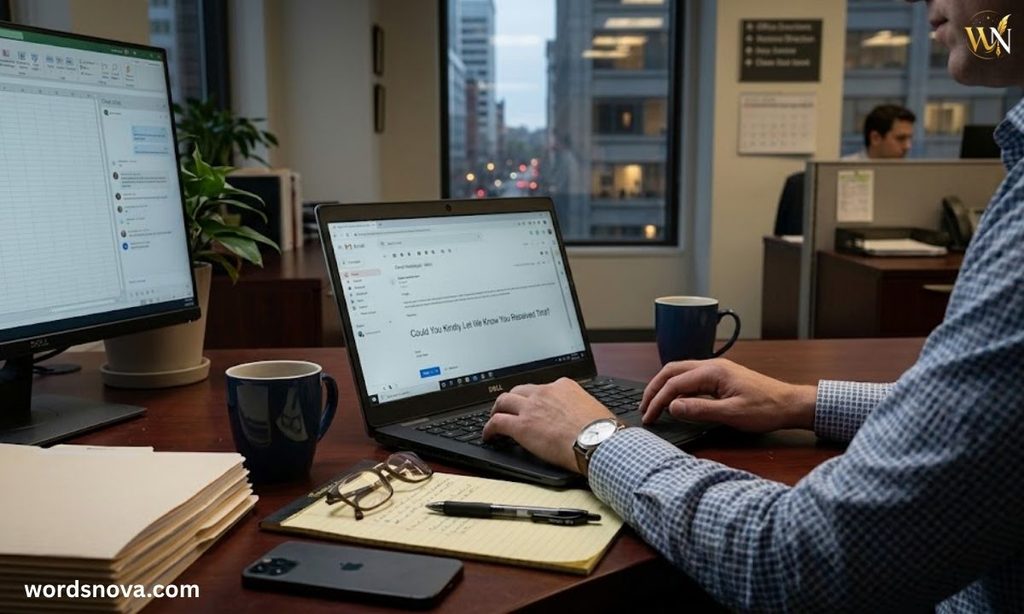
Meaning: A polite, slightly longer version of a standard confirmation request.
Scenario: You’re emailing a client and want a longer, extra-polite way to ask them to confirm your message arrived.
Best Use: Client-facing emails where politeness and professionalism are both priorities.
Tone: Polite and formal.
The extra length and softness of this phrase make it well-suited for external communication where first impressions matter.
Examples:
- Could you kindly let me know you received this before our next call?
- Could you kindly let me know you received this along with the invoice?
- Could you kindly let me know you received this at your earliest convenience?
- Could you kindly let me know you received this so we can proceed?
- Could you kindly let me know you received this update on your account?
- Could you kindly let me know you received this important notice?
27. Please Confirm You Have Received My Message
Meaning: A standard, neutral phrase that clearly asks for acknowledgment of a message.
Scenario: You’re sending a standard business email and want a dependable, all-purpose way to request acknowledgment.
Best Use: General business use across most professional contexts.
Tone: Neutral and formal.
This is a dependable, straightforward alternative that works in nearly any professional setting without sounding too casual or too stiff.
Examples:
- Please confirm you have received my message and the attached file.
- Please confirm you have received my message before end of day.
- Please confirm you have received my message regarding the schedule change.
- Please confirm you have received my message so I can proceed.
- Please confirm you have received my message from this morning.
- Please confirm you have received my message about the upcoming review.
28. I Would Appreciate a Quick Acknowledgment
Meaning: A polite, professional request framed around gratitude for a brief reply.
Scenario: You’re updating leadership on a project and want a professional, efficient way to ask for a brief reply.
Best Use: Emails to management or higher-level stakeholders who value efficiency.
Tone: Polite and professional.
This phrase balances courtesy with brevity, making it appropriate when you want to sound respectful while still asking for a fast response.
Examples:
- I would appreciate a quick acknowledgment once you’ve had a chance to review.
- I would appreciate a quick acknowledgment before we proceed further.
- I would appreciate a quick acknowledgment on the revised proposal.
- I would appreciate a quick acknowledgment so I can update leadership.
- I would appreciate a quick acknowledgment at your earliest convenience.
- I would appreciate a quick acknowledgment regarding the enclosed report.
29. Confirming Receipt Would Be Helpful
Meaning: A soft, collaborative way to frame the request as something useful rather than mandatory.
Scenario: You’re working with a project team and want to frame the confirmation request as helpful rather than demanding.
Best Use: Team-based or collaborative settings where a gentler tone fits the culture.
Tone: Soft and courteous.
Rather than issuing a command, this phrase frames confirmation as a favor that helps the process move smoothly, which reads as considerate.
Examples:
- Confirming receipt would be helpful so we can keep the project on track.
- Confirming receipt would be helpful before we finalize the next steps.
- Confirming receipt would be helpful, especially given the tight timeline.
- Confirming receipt would be helpful so everyone stays informed.
- Confirming receipt would be helpful for our internal records.
- Confirming receipt would be helpful whenever you get a chance to check.
30. Please Reply to Confirm Receipt

Meaning: A clear, formal instruction that specifies exactly what action is expected , a reply.
Scenario: You need an unmistakable call-to-action so the recipient knows exactly what’s expected of them: a reply.
Best Use: Emails where you want an unmistakable call-to-action, leaving no room for ambiguity.
Tone: Direct and formal.
Unlike vague phrases, this one tells the recipient precisely what to do, which reduces the chance of the request being overlooked.
Examples:
- Please reply to confirm receipt of the attached agreement.
- Please reply to confirm receipt so we can proceed with processing.
- Please reply to confirm receipt within 24 hours if possible.
- Please reply to confirm receipt of this important notice.
- Please reply to confirm receipt before the offer expires.
- Please reply to confirm receipt of the updated invoice.
Frequently Asked Questions
What are Other Ways to Say Please Confirm Receipt of This Email?
Other Ways to Say Please Confirm Receipt of This Email include polite phrases like “Please let me know you received this” or “Kindly acknowledge receipt.”
How can I politely ask someone to confirm receipt of an email?
You can politely ask by saying, “Please confirm you received this email.” Other Ways to Say Please Confirm Receipt of This Email sound friendly and professional.
What is a professional way to confirm email receipt?
A professional phrase is “Kindly acknowledge receipt of this email.” Other Ways to Say Please Confirm Receipt of This Email help make workplace communication clear and respectful.
Can I say please acknowledge receipt of this email?
Yes, you can use this formal phrase in business emails. Other Ways to Say Please Confirm Receipt of This Email offer warmer options for everyday communication.
How do I ask for email confirmation without sounding rude?
Use polite words like “when convenient” or “please let me know.” Other Ways to Say Please Confirm Receipt of This Email keep your message respectful and friendly.
What should I write to confirm someone received my message?
Write, “Please let me know once you receive this message.” Other Ways to Say Please Confirm Receipt of This Email provide several natural alternatives for different situations.
Is please confirm receipt of this email is a formal phrase?
Yes, it is generally formal and professional. Other Ways to Say Please Confirm Receipt of This Email can help you choose casual, polite, or warmer wording.
Conclusion
Using Other Ways to Say Please Confirm Receipt of This Email makes your messages polite, clear, and natural. The phrase please confirm receipt of this email is useful in professional communication. Understanding the please confirm receipt of this email meaning helps you use it correctly and avoid confusion.
There are many Other Ways to Say Please Confirm Receipt of This Email for business and daily messages. You can ask someone to confirm receipt of email or say please acknowledge receipt of this email. Sometimes, a simple please acknowledge is enough to keep communication clear and professional.